Jevons Paradox: DeepSeek-R1 Will Ultimately Drive Demand for NVIDIA's GPUs
In 1865, William Jevons observed that coal consumption in England was growing exponentially despite increasingly efficient steam engines. Similarly, in the coming years, more efficient AI models like DeepSeek-R1 could drive demand for NVIDIA's GPUs, not reduce it.

Disclosure: The author holds a beneficial long position in Nvidia Corporation (NASDAQ: NVDA). This article is provided for informational and entertainment purposes only and does not constitute financial advice. The views expressed here represent the author’s personal opinion. The author receives no compensation for this article and has no business relationship with the company mentioned. Please see the full "Legal Information and Disclosures" section below.
In his 1865 work "The Coal Question", the English economist William Stanley Jevons formulated the paradox named after him: "It is wholly a confusion of ideas to suppose that the economical use of fuel is equivalent to a diminished consumption. The very contrary is the truth."
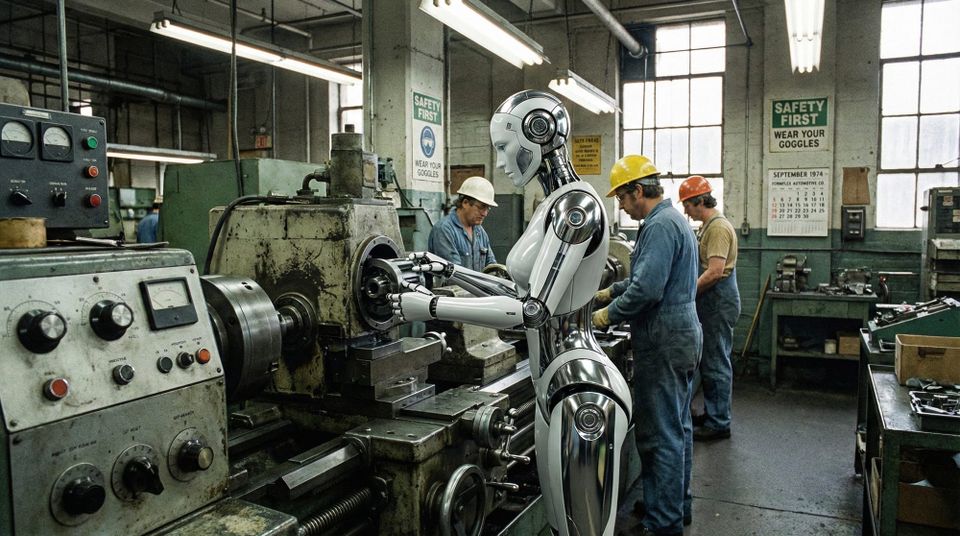
Jevons had studied English coal consumption and found that it had continued to grow exponentially, even though coal had been used more and more efficiently since the invention of Watt's steam engine. Each new generation of steam engines consumed less and less coal than its predecessors, but the number of steam engines in use grew exponentially because the number of applications grew exponentially. At the beginning of the 19th century, steam engines were mainly used to power weaving machines, but over the years the technology spread to almost every other field, disrupting more and more sectors of the economy. Eventually, steam engines were essential to everything from transportation to agriculture, and coal consumption skyrocketed.
In my opinion, NVIDIA's GPUs are today's equivalent of coal in Jevons Paradox, a limited resource. The release of the open source reasoning model DeepSeek-R1 by the Chinese startup DeepSeek led to panicking stock markets and a notable crash in tech stocks on January 27, 2025, led by NVIDIA. The order of magnitude more efficient use of the "resource" GPU made Wall Street question the billions of dollars invested in GPU servers. Until now, it has been assumed that the computing power of massive GPU servers alone created a moat for the development of cutting-edge AI - an assumption that DeepSeek swept away overnight.
Anyone who now sees an investment bubble in GPU server capacity that will be burst by the efficiency of DeepSeek-R1 is, in my opinion, misreading the situation. But how did we get here?
It seems that the Biden administration's export ban was not strict enough to really cut off China from NVIDIA's high-end GPUs, but it was effective enough to make them scarce in China. These conditions may have been the perfect breeding ground for the development of a highly efficient AI model like DeepSeek-R1. While the very existence of this extra-American AI model challenges American technological supremacy, we must not forget that it was trained on NVIDIA's GPUs. As software becomes commoditized, open source DeepSeek-R1 shows me once again that AI is a hardware revolution, not a software revolution. And NVIDIA remains at the center of that revolution.
It may have cost more than the reported $5.6 million to train DeepSeek-R1, and perhaps tens of thousands of NVIDIA's GPUs found their way into China despite export controls. However, it may have been the scarcity of computing power that ultimately drove Chinese innovation to its peak. Necessity was made a virtue: without export restrictions, Chinese AI models might not be much further ahead, but the U.S. would be richer.
Just as Jevons described the consumption of coal by increasingly efficient steam engines over a century and a half ago, the increasing efficiency of AI models will drive demand for GPUs, not reduce it. Efficient open source models like DeepSeek-R1 will lead to a democratization of AI, and AI models will finally become a commodity. More startups and individuals will be able to build AI products themselves. Edge computing will open up new markets that NVIDIA has already entered with products like Jetson. Instead of a few hyperscalers as customers, NVIDIA will sell to more customers and we will see a redistribution of demand. AI will revolutionize all industries, just like the steam engine revolutionized all industries in the 19th century.
The release of DeepSeek-R1 is now often referred to as America's new Sputnik moment. It should be remembered that it was only after the Sputnik shock that U.S. investment and effort in space really took off. So now the AI arms race begins. Nvidia will provide the hardware.
Follow me on X for frequent updates (@chaotropy).
Legal Information and Disclosures
General Disclaimer & No Financial Advice: The content of this article is for informational, educational, and entertainment purposes only. It represents the personal opinions of the author as of the date of publication and may change without notice. The author is not a registered investment advisor or financial analyst. This content is not intended to be, and shall not be construed as, financial, legal, tax, or investment advice. It does not constitute a personal recommendation or an assessment of suitability for any specific investor. Readers should conduct their own independent due diligence and consult with a certified financial professional before making any investment decisions.
Accuracy and Third-Party Data: Economic trends, technological specifications, and performance metrics referenced in this article are sourced from independent third parties. While the author believes these sources to be reliable, the completeness, timeliness, or correctness of this data cannot be guaranteed. The author assumes no liability for errors, omissions, or the results obtained from the use of this information.
Disclosure of Interest: The author holds a beneficial long position in the securities of Nvidia Corporation (NASDAQ: NVDA). The author reserves the right to buy or sell these securities at any time without further notice. The author receives no direct compensation for the production of this content and maintains no business relationship with the companies mentioned.
Forward-Looking Statements & Risk: This article contains forward-looking statements regarding product adoption, technological trends, and market potential. These statements are predictions based on current expectations and are subject to significant risks and uncertainties. Investing in technology and growth stocks is speculative, subject to rapid change and competition, and involves a risk of loss. Past performance is not indicative of future results.
Copyright: All original content, including text and images, is the property of the author and may not be copied, reproduced, or published, in whole or in part, without prior written consent, except as permitted by applicable law or the terms of the platform on which it is published. Use of this content for training machine learning or AI models is not permitted without explicit authorization. Third-party or public domain images remain subject to their respective rights and are not claimed as the author's property.