Our World Is Built For Hands And Feet: We Need Humanoid Robots
Critics of humanoids are staring at the robot when they should be looking at the room.
Disclosure: This article is provided for informational and entertainment purposes only and does not constitute financial advice. The views expressed here represent the author’s personal opinion. The author receives no compensation for this article and has no business relationship with the company mentioned. Please see the full "Legal Information and Disclosures" section below.
The "Big Short" investor Michael Burry recently argued that humanoid robots are a "vanity project" and an "inexplicably stupid idea" because the future belongs to specialized "robots not limited by the human shape."
He could not be more wrong.
It is easy to dismiss ambitious ideas like humanoid robots when some of the first versions of the technology look more like gimmicks for Disneyland than reliable devices.
The Wall Street Journal recently cited Ken Goldberg, a roboticist at UC Berkeley, who noted that while building a hand is hard, the true research frontier is perception: the capacity to see a chaotic room and not trip over a cable, a problem not yet reliably solved.
I am sure the man knows what he is talking about, but the performance of artificial brains is exploding right now. Situations that overwhelm today's AI models will likely be a literal walk in the park in the not-so-distant future.
Even if humanoid robots are further from commercialization than many optimists assume, that does not mean the humanoid form is not coming.
But doesn't Burry have a valid point when he asks why we should spend billions making a machine walk on two legs when wheels, for example, are stable and cheap?
Burry is wrong because he is staring at the robot when he should be looking at the room.
The humanoid robot is the solution to the "Interface Problem." While AI has conquered the digital realm, it remains a brain without a body. To drive productivity in the physical world, AI must be able to manipulate matter. The problem is that our physical reality is a "brownfield" project. It is a legacy codebase written over thousands of years.
We have engineered the entire surface of our planet for a specific biological form factor. We built it for a creature that is roughly 5.5 feet tall, walks on two legs, and manipulates objects with two five-fingered hands.
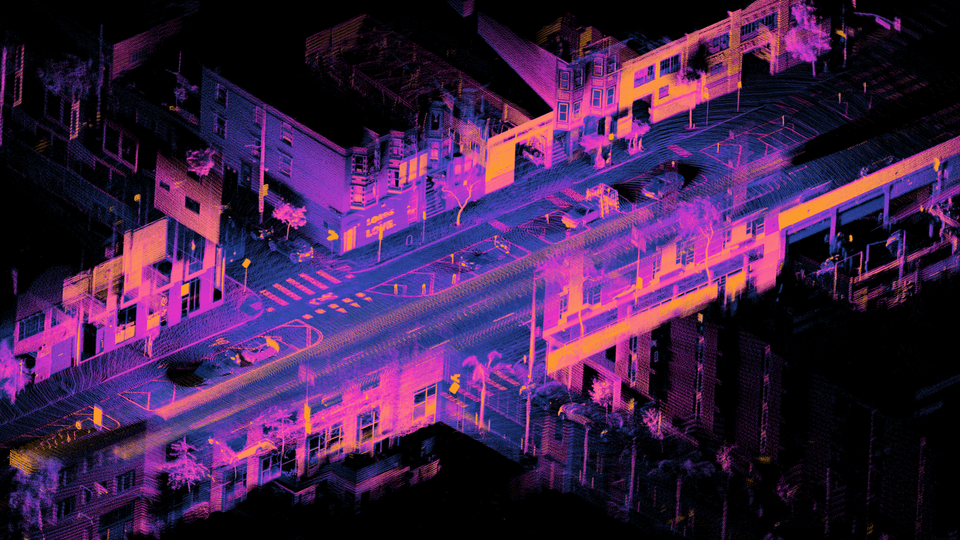
Look at your immediate environment. The height of a door handle is not random. The rise of a staircase is calculated for the human gait. The width of a warehouse aisle, the layout of a cockpit, and the buttons on a microwave are all legacy code. A washing machine is a physical interface designed to be loaded and operated by a human.
If we follow Burry’s logic, we should build specialized robots that look like cars, tanks, and multicopters. However, that creates a massive issue with compatibility.
To make a non-humanoid robot truly useful in a standard home, you have to refactor the environment. You have to remove thresholds. You have to redesign every tool to be machine-readable. You essentially have to rebuild the world to suit the machine.
That is economic insanity built on the truly vain idea that the world must change for the technology we develop.
The humanoid is the "universal adapter" for our reality. It is the only hardware solution capable of plugging into the world’s existing physical API without forcing us to tear down our infrastructure.
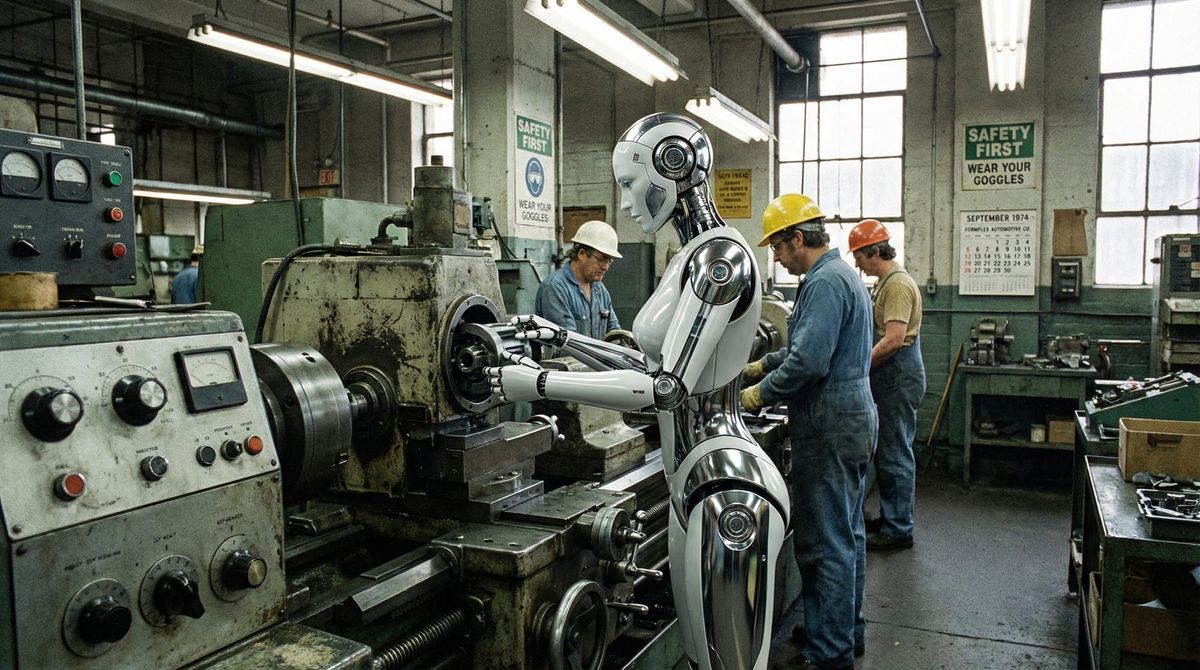
We do not need humanoids because of the vanity of creating machines in our own image. We need them because we are cheap. We need a machine that can walk into a factory built in 1984, pick up a drill designed in 1996, and get to work without a single renovation.
Besides, this urge to encode intelligence into a human shape is not a new whim of Silicon Valley. It is an ancient technical obsession that has just lacked a solution until now.
Consider the legend of the Golem of Prague. Rabbi Judah Loew ben Bezalel sculpted a protector out of river clay. This was the mute hardware. He animated it by placing a shem, a capsule with a holy name, into its mouth. In some versions, he wrote the word emet, meaning truth, on its forehead.
This was the original idea of prompting: the Rabbi was trying to interface with the physical world through an agent.
Crucially, the Golem had to be humanoid. It had to walk the cobblestone streets of the Jewish Quarter. It had to open (and close!) heavy gates. It had to fetch water. A tank or a mechanical arm could not have navigated the human infrastructure of Prague. The humanoid form was a requirement of the environment.
Today we are swapping river clay for carbon fiber and the shem for LLMs, but the concept remains the same. We are building digital Golems to do dangerous and dull work. Just like in the legend from 16th-century Prague, they need to look like us to live with us.
There is a final, deeper layer here. Burry calls it vanity, but for the technologist, it looks a lot more like a roadmap for survival. We are building these machines as mirrors. By solving the immense complexity of bipedal balance and tactile sensing, we are reverse-engineering our own body.
In the short term, these robots will be our workers. In the long run, however, solving the humanoid form is the prerequisite for solving disability. If we ever hope to extend human consciousness beyond our biological expiration date, we might need a vessel that interfaces with the world exactly as we do. This technology might soon benefit the injured via intelligent prostheses and the handicapped with exoskeletons.
So no, building humanoids is not "vanity" but pure sanity, and perhaps the necessary bridge to our own future.
Follow me on X for frequent updates (@chaotropy).
Legal Information and Disclosures
General Disclaimer & No Financial Advice: The content of this article is for informational, educational, and entertainment purposes only. It represents the personal opinions of the author as of the date of publication and may change without notice. The author is not a registered investment advisor or financial analyst. This content is not intended to be, and shall not be construed as, financial, legal, tax, or investment advice. It does not constitute a personal recommendation or an assessment of suitability for any specific investor. Readers should conduct their own independent due diligence and consult with a certified financial professional before making any investment decisions.
Accuracy and Third-Party Data: Economic trends, technological specifications, and performance metrics referenced in this article are sourced from independent third parties. While the author believes these sources to be reliable, the completeness, timeliness, or correctness of this data cannot be guaranteed. The author assumes no liability for errors, omissions, or the results obtained from the use of this information.
Disclosure of Interest: The author reserves the right to buy or sell securities at any time without further notice. The author receives no direct compensation for the production of this content and maintains no business relationship with the companies mentioned.
Forward-Looking Statements & Risk: This article contains forward-looking statements regarding product adoption, technological trends, and market potential. These statements are predictions based on current expectations and are subject to significant risks and uncertainties. Investing in technology and growth stocks is speculative, subject to rapid change and competition, and involves a risk of loss. Past performance is not indicative of future results.
Copyright: All original content, including text and images, is the property of the author and may not be copied, reproduced, or published, in whole or in part, without prior written consent, except as permitted by applicable law or the terms of the platform on which it is published. Use of this content for training machine learning or AI models is not permitted without explicit authorization. Third-party or public domain images remain subject to their respective rights and are not claimed as the author's property.