iOS 18 And A New Era Of Space Economy
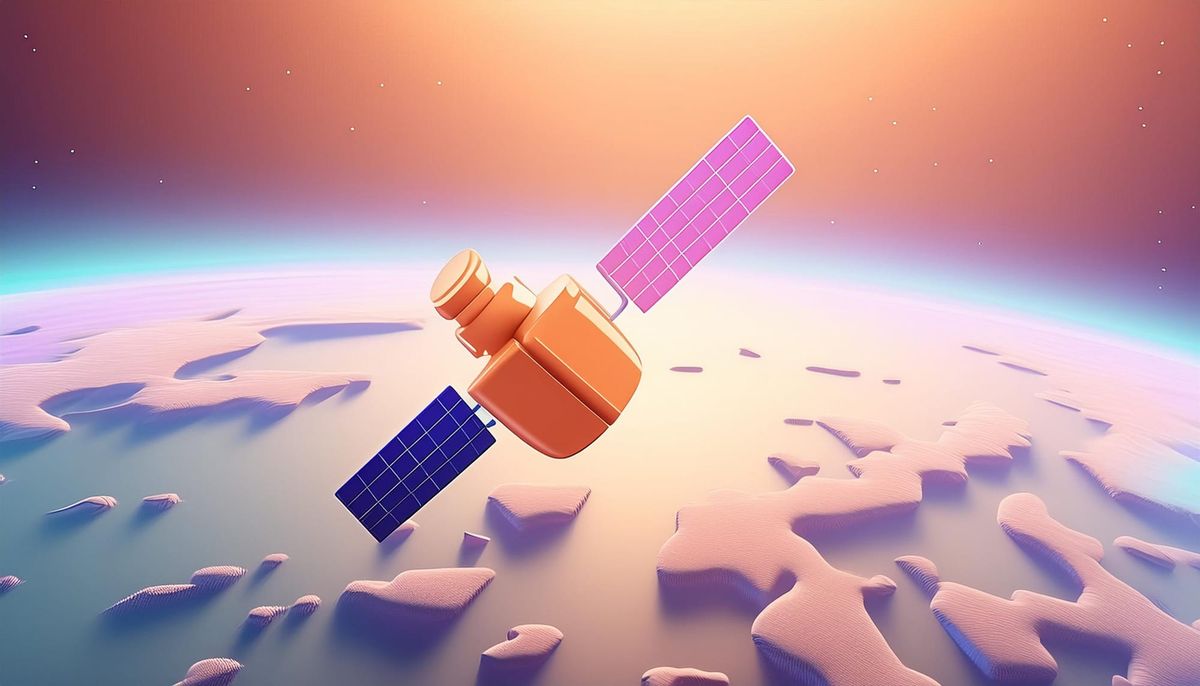
Announced for iOS 18, iMessage via satellite Internet marks a paradigm shift and a new era in the space industry.
Disclosure: The author holds a beneficial long position in Apple Inc. (NASDAQ: AAPL). This article is provided for informational and entertainment purposes only and does not constitute financial advice. The views expressed here represent the author’s personal opinion. The author receives no compensation for this article and has no business relationship with the company mentioned. Please see the full "Legal Information and Disclosures" section below.
The World Economic Forum's 2024 Space Report predicts that the space economy will grow 9% annually from $630 billion to $1.79 trillion in 2035. The space economy goes far beyond rockets and space stations. It's impact can already be felt in unexpected places: The services of Uber and Lyft, for example, rely heavily on satellite positioning, so both companies can be considered part of the space economy.
For iOS 18, Apple announced a little-noticed innovation: iMessage over satellite. Starting in the U.S., iPhone users will be able to send and receive messages without WiFi or a cellular network. This is the first step in bringing satellite Internet to the masses.
Approximately one-third of the world's population still does not have Internet access and is therefore unable to participate in the digital world. This means that the global economy is currently missing out on about a third of the ideas, talent and entrepreneurship that would unfold if all of humanity were online. Providing ubiquitous Internet access via satellite would open up the possibilities of the Internet to billions of people. The economic power that would be unleashed by bringing this part of humanity online would ultimately be part of the space economy.
To achieve this, Elon Musk's SpaceX launched its Starlink low-Earth orbit (LEO) satellite internet constellation beginning in 2020, with plans to deploy up to 42,000 Starlink satellites in total to cover nearly the entire surface of the Earth. Thousands of Starlink satellites are currently in orbit and service is available in several countries, particularly in rural and hard-to-reach areas. The project took on greater geopolitical significance when Elon Musk made it available to Ukraine after Russia's invasion in 2022. With Project Kuiper, Amazon is also planning a LEO satellite internet constellation of over 3,000 satellites to provide global internet coverage.
The launch of iMessage over satellite marks the first major commercial opening of satellite Internet to consumer devices. This represents a paradigm shift that could fundamentally change the way we think about Internet access and global connectivity. For U.S. consumers, satellite Internet may "just" mean being able to stay connected when outdoors. For the masses still offline, satellite Internet will be a seismic shift. It will be exciting to see what ideas, ventures and technologies the Internet makes possible in previously offline regions.
Follow me on X for frequent updates (@chaotropy).
Legal Information and Disclosures
General Disclaimer & No Financial Advice: The content of this article is for informational, educational, and entertainment purposes only. It represents the personal opinions of the author as of the date of publication and may change without notice. The author is not a registered investment advisor or financial analyst. This content is not intended to be, and shall not be construed as, financial, legal, tax, or investment advice. It does not constitute a personal recommendation or an assessment of suitability for any specific investor. Readers should conduct their own independent due diligence and consult with a certified financial professional before making any investment decisions.
Accuracy and Third-Party Data: Economic trends, technological specifications, and performance metrics referenced in this article are sourced from independent third parties. While the author believes these sources to be reliable, the completeness, timeliness, or correctness of this data cannot be guaranteed. The author assumes no liability for errors, omissions, or the results obtained from the use of this information.
Disclosure of Interest: The author holds a beneficial long position in the securities of Apple Inc. (NASDAQ: AAPL). The author reserves the right to buy or sell these securities at any time without further notice. The author receives no direct compensation for the production of this content and maintains no business relationship with the companies mentioned.
Forward-Looking Statements & Risk: This article contains forward-looking statements regarding product adoption, technological trends, and market potential. These statements are predictions based on current expectations and are subject to significant risks and uncertainties. Investing in technology and growth stocks is speculative, subject to rapid change and competition, and involves a risk of loss. Past performance is not indicative of future results.
Copyright: All content is the property of the author. This article may not be copied, reproduced, or published, in whole or in part, without the author's prior written consent.