Why Rate Cuts Might Actually Fuel Job Cuts
Ahead of the Fed's December 10 meeting, markets expect a rate cut to support the labor market. Yet this faces a paradox. Cheaper credit is funding AI infrastructure poised to replace human labor. The Fed's attempt to preserve jobs may inadvertently lower the cost of technologies eliminating them.

Disclosure: This article is provided for informational and entertainment purposes only and does not constitute financial advice. The views expressed here represent the author’s personal opinion. The author receives no compensation for this article and has no business relationship with the company mentioned. Please see the full "Legal Information and Disclosures" section below.
As the Federal Reserve approaches its final meeting of 2025 on December 10, futures markets are pricing in an 87% probability of a rate cut. This move would lower the target range to 3.50% to 3.75% and reinforce the central bank’s mission to support a cooling labor market. With unemployment reaching 4.4% in September and job creation stalling, policymakers are eager to reduce the cost of money. However, this strategy now faces a dangerous paradox.
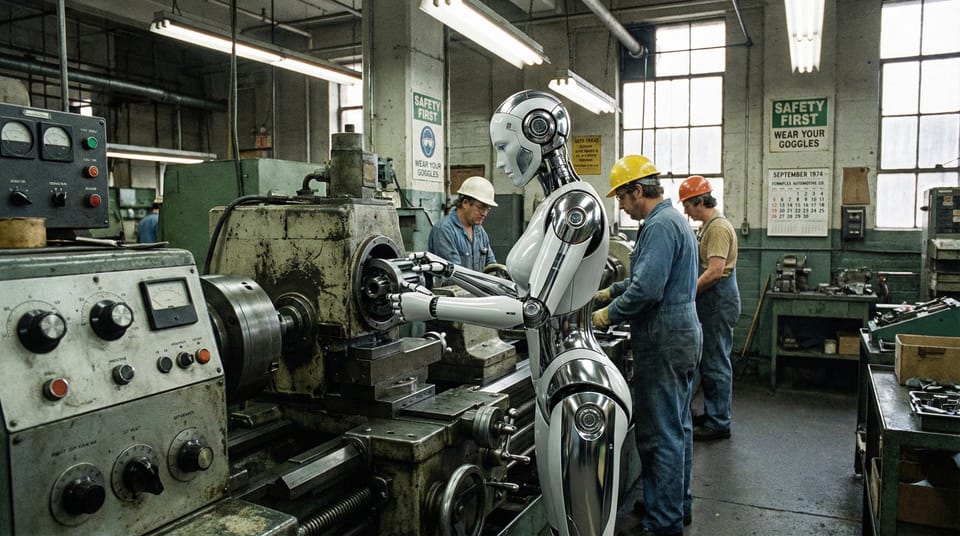
Further rate cuts risk inflating the AI bubble while the underlying economic reality darkens. Cheaper credit is no longer merely stimulating hiring, but is instead funding a massive, increasingly debt-heavy expansion of artificial intelligence infrastructure paving the way to replace the very human labor the Fed intends to save.
The economy has changed fundamentally since previous cycles. Historically, lower rates drove hiring. However, today liquidity is increasingly absorbed by capital-intensive automation. Gartner predicts that worldwide AI spending will exceed $2 trillion in 2026. As corporations use cheaper credit to fund infrastructure projects that were unviable at higher rates, the financial incentive to automate might override the incentive to hire.
The job market has already deteriorated to levels that rival the aftermath of the Great Recession. According to Challenger, Gray & Christmas, U.S. employers have announced over 1.17 million layoffs year-to-date in 2025. This marks the highest level since 2020. The technology sector alone has shed more than 153,000 jobs, with many companies citing AI-driven efficiencies as the primary driver. In effect, companies are swapping workers for software at an unprecedented pace. A study by Ping Wang and Tsz-Nga Wong for the NBER quantifies this trajectory. Their model predicts that in an aggressive AI adoption scenario, the economy could suffer a long-term employment loss of 23%. Crucially, half of those losses would concentrate in the first five years of the transition.
Federal Reserve Chair Jerome Powell has addressed this tension by acknowledging that the central bank’s toolkit is ill-equipped for such a transformation. In testimony on the evolving workforce, Powell admitted that AI "can either augment people’s productivity or it can replace people, or it can do a little bit of both, but it’s going to be something." He has also frankly noted, while discussing "changes in trade and immigration policies," that "monetary policy can work to stabilize cyclical fluctuations but can do little to alter structural changes." Despite this awareness, the Federal Open Market Committee (FOMC) appears to be treating the current labor weakness as a standard cyclical downturn that can be fixed with lower rates.
If the FOMC proceeds with the expected cut tomorrow, they may well boost asset prices and corporate balance sheets. However, they also risk incentivizing a rapid shift toward automated labor that leaves millions of workers behind. This might feel bullish for the stock market in the short term, but roughly 70% of GDP comes from consumer spending, and unemployed consumers spend far less. Projects utilizing robotics or fully automated service agents become significantly more attractive when financed at 3.5% rather than 5%. Consequently, the central bank's attempt to preserve jobs with lower interest rates is inadvertently lowering the cost of the technologies poised to eliminate them.
Follow me on X for frequent updates (@chaotropy).
Legal Information and Disclosures
General Disclaimer & No Financial Advice: The content of this article is for informational, educational, and entertainment purposes only. It represents the personal opinions of the author as of the date of publication and may change without notice. The author is not a registered investment advisor or financial analyst. This content is not intended to be, and shall not be construed as, financial, legal, tax, or investment advice. It does not constitute a personal recommendation or an assessment of suitability for any specific investor. Readers should conduct their own independent due diligence and consult with a certified financial professional before making any investment decisions.
Accuracy and Third-Party Data: Economic trends, technological specifications, and performance metrics referenced in this article are sourced from independent third parties. While the author believes these sources to be reliable, the completeness, timeliness, or correctness of this data cannot be guaranteed. The author assumes no liability for errors, omissions, or the results obtained from the use of this information.
Disclosure of Interest: The author reserves the right to buy or sell securities at any time without further notice. The author receives no direct compensation for the production of this content and maintains no business relationship with the companies mentioned.
Forward-Looking Statements & Risk: This article contains forward-looking statements regarding product adoption, technological trends, and market potential. These statements are predictions based on current expectations and are subject to significant risks and uncertainties. Investing in technology and growth stocks is speculative, subject to rapid change and competition, and involves a risk of loss. Past performance is not indicative of future results.
Copyright: All content is the property of the author. This article may not be copied, reproduced, or published, in whole or in part, without the author's prior written consent.